Workplace Environment, Health & Safety
Health and Safety
Basic Policy
Alps Alpine believes it is important to provide clean, safe workplaces where all regular and temporary employees, and all other people involved in Alps Alpine’s business activities feel at ease while maintaining good physical and mental health. To achieve that at workplaces in Japan, we have established an occupational health and safety policy and we operate an occupational health and safety system. We also ask outside parties engaging in operations under our supervision to comply with this policy and ensure equivalent health and safety standards.
Occupational Health and Safety Policy
Alps Alpine aims for a corporate culture that promotes health and safety, encouraging communication among colleagues in a workforce where everyone plays a role in occupational health and safety activities and ensuring compliance with related laws, ordinances, requests and requirements.
- We strive to prevent work-related accidents through the realization of workplace environments where employees feel safe working because recurrence prevention measures are fully implemented and hazard sources are eliminated.
- We aim to promote healthy body and healthy mind maintenance by pursuing companywide health and productivity management in partnership with the health insurance association.
Promotion Structure
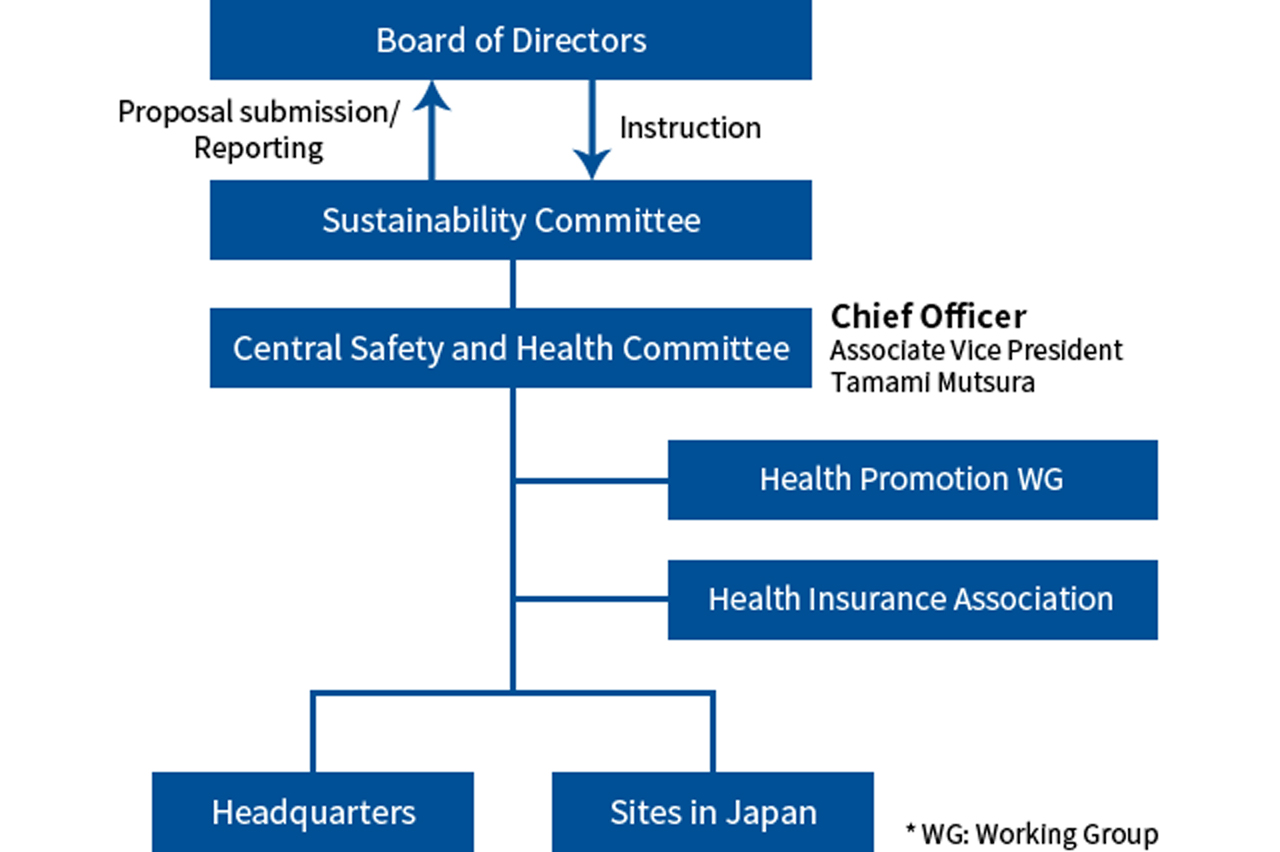
Alps Alpine has in place a Central Health and Safety Conference with the associate vice president in charge of general affairs as the person in charge. Through the conference, the company sets policy and advances activities relating to health and safety, health promotion, fire prevention and traffic safety in Japan, and endeavors to prevent accidents, identify accident causes, and prevent recurrence. Results of activities are regularly reported to the Board of Directors through the Sustainability Committee. Overseas, each base carries out its own activities.
Strategy
We have acquired ISO 45001 certification, an occupational health and safety management system standard, mainly at our production sites, and strive to reduce and manage health and safety risks through risk assessment and compliance with laws and regulations. The certification rate for all global production sites is 68% (as of October 2026).
Risk Management
Health and Safety Assessments
Health and safety assessments, which also cover chemical substance management, are conducted once a year. Assessments (initial, follow-up or change assessments) are also carried out when establishing, or making changes to, new equipment or facilities and efforts are made to reduce the risk of accidents. Where an accident is narrowly avoided, problems are discovered, or an accident has occurred, we implement corrective action and preventive measures and endeavor to prevent a recurrence by assessing the corrective action and replicating preventive measures across the organization.
Metrics and Targets
Mid-Term Management Plan 2027 metrics and targets and past performance are as follows.
We undertake health and safety activities with a target of zero serious work-related accidents (accidents resulting in death and work-related accidents resulting in a long-term disability). No serious work-related accidents occurred in fiscal 2025.
| Scope | FY2023 Results |
FY2024 Results |
FY2025 Results |
Mid-Term Management Plan 2027 FY2027 Target |
||
|---|---|---|---|---|---|---|
| Number of serious occupational accidents | Consolidated* | 0 | 0 | 0 | 0 |
* Workers covered are workers under Alps Alpine supervision (incl. contract and temporary employees).
Work-Related Accidents – Targets and Results
Because falls accounted for the largest number of work-related accidents, the fiscal 2025 target for work-related accidents focused on preventing lost-time accidents due to falls. And because the number of commuting accidents increased from the previous year, a target was set for participation in road safety courses for workers who commute by car or bicycle. Attainment ratios of 100% were achieved for both targets.
<FY2025 Targets and Results>
| Target | Results | Scope | ||
|---|---|---|---|---|
| Occupational accidents* | ||||
| Prevent lost-time accidents due to falls | Implement safety training once a year; Complete (100%) hazard source identification at all workplaces |
100% | Non-consolidated | |
| Global sharing of accident details and countermeasures | 100% | 100% | Consolidated | |
| Commuting accidents* (prevent accidents causing third-party injuries or self-injury) | 100% participation in road safety courses for workers who commute by car or bicycle | 100% | Non-consolidated | |
* Work-related accidents with or without absence from work
<FY2026 Targets>
| Target | Scope | |
|---|---|---|
| Lost-time accidents resulting in absence of one month or more | 0 | Non-consolidated |
| Lost-time accidents – year-on-year reduction | 13 or less | |
| Drink-and-drive cases | 0 |
Other Results
| Unit | FY2023 | FY2024 | FY2025 | Scope*1 | |
|---|---|---|---|---|---|
| No. of work-related accidents | Cases | 70 | 83 | 84 | Consolidated |
| Cases | 7 | 8 | 13 | Non-consolidated | |
| No. of lost workdays | Days | - | 1,876 | 635 | Consolidated |
| Frequency rate*2 *3 | - | 0.51 | 0.49 | 0.67 | Non-consolidated |
| Manufacturing industry frequency rate average (electrical machinery and equipment manufacturing) |
- | 0.54 | 0.67 | 0.60 | Japan |
| Severity rate*4 | - | 0.005 | 0.001 | 0.004 | Non-consolidated |
| - | 0.026 | 0.001 | Consolidated |
*1 Workers covered under a consolidated or non-consolidated scope are workers who engage in Alps Alpine business activities (incl. contract and temporary employees and employees of administrative subsidiaries).
*2 Lost-time injury frequency rate (LTIFR): Number of casualties due to work-related accidents (one or more days absence from work) ÷ Total number of working hours × 1,000,000
*3 Calculated based on the total number of working hours of all people who engage in Alps Alpine business activities on Alps Alpine premises (e.g. regular and temporary employees and subcontractors)
*4 Lost-time injury severity rate (LTISR): (Total number of lost workdays ÷ Total working hours) × 1,000
Health and Safety Initiatives
Education About Occupational Health and Safety
To help prevent work-related accidents, health and safety education is provided to all employees, including temporary employees, once a year. In fiscal 2025, health and safety education was provided to around 8,950 employees (in Japan). Road safety seminars are also implemented to help prevent road accidents. Around 9,300 employees (in Japan) took part in fiscal 2025.
In addition, we implement Alps Alpine Group Code of Conduct training for employees worldwide once a year in order to promote and entrench the code, including aspects relating to occupational health and safety. In fiscal 2025, around 27,000 employees received the training, a participation rate of 99.1%.
For more about training on the Group Code of Conduct, visit:
Compliance
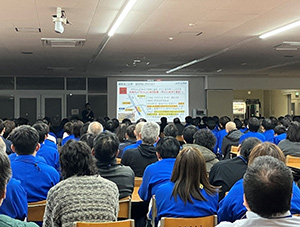
Road safety seminar (Iwaki R&D Center)
Raising Awareness for Drink-and-Drive Eradication
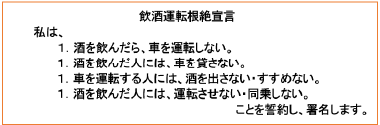
Our ongoing campaign to eradicate drinking and driving involves providing warnings during occupational health and safety education and, targeting all employees in Japan, raising awareness in morning assemblies and via health and safety bulletins. We also encourage employees to make a greater individual commitment by having them sign a declaration of support for drink-and-drive eradication.
Work Environments and Occupational Health and Safety in the Supply Chain
To check levels of compliance with the Alps Alpine Responsible Corporate Action Guidelines and to promote risk mitigation within the supply chain, we conduct CSR assessments of our main suppliers. This entails a supplier self-assessment examining areas such as labor affairs and health and safety. Corrective action is requested and improvements are monitored as required.
For more about CSR assessments, visit:
Supplier Assessment Program
Health and Productivity Management
Basic Policy
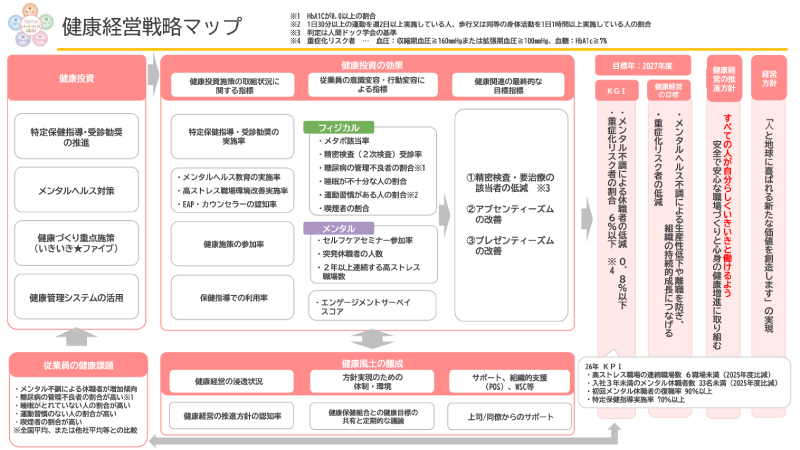
Alps Alpine formulated its Declaration of Health and Productivity Management, applicable to employees in Japan, in April 2021, having recognized the health of our employees as an important management resource. In 2026, we formulated a Health and Productivity Management Strategy Map, establishing five priority actions for health promotion, and we have introduced a health management system as we advance initiatives for improving the mental and physical wellbeing of individual employees and realizing dynamic workplace environments.
Declaration of Health and Productivity Management
Alps Alpine regards the well-being of its employees and their families as a foundation for realizing its Corporate Philosophy, “Alps Alpine innovates value for humans and society on a brighter planet.” We are committed to creating safe and comfortable work environments while contributing to improving the mental and physical wellbeing of each individual.
Hideo Izumi
Representative Director, President
Strategy
In fiscal 2026, we formulated a Health and Productivity Management Strategy Map, specifying a policy for promoting health and productivity management: “We will strive to empower every employee to work with vitality as their true self by creating safe and comfortable work environments and helping to improve employee mental and physical wellbeing.” Recognizing employee health as a vital foundation for running a business, we work to maintain and improve mental and physical health through specific health guidance, mental health measures, health promotion measures, and utilization of a health management system. Making use of health data and engagement surveys, we also seek to lower the risk of lifestyle diseases, establish regular exercise habits, and prevent or respond early to the onset of mental health conditions. Through these efforts, we plan to reduce the number of employees at risk of serious illness and improve absenteeism and presenteeism. Our aims are to raise productivity and realize sustainable growth of the organization.

Metrics and Targets
Mid-Term Management Plan 2027 metrics and targets and past performance are as follows.
| Scope | FY2025 Results |
Mid-Term Management Plan 2027 FY2027 Target |
||
|---|---|---|---|---|
| Workplace improvement implementation rate for high-stress* | Non-consolidated | 100% | 100% |
* Workplaces found to have high stress levels according to stress checks
Health and Productivity Management – Targets and Results
In fiscal 2025, we achieved our targets for implementation of high-stress workplace improvements and strengthening of follow-up for first-time returning employees. However, we missed our leave of absence rate target for employees with less than 3 years’ service and specific health guidance implementation rate target. We will therefore continue efforts to bring about improvements.
In fiscal 2026, we will systematically carry out health-related measures that support employee health maintenance and improvement and lead to invigoration of the organization in line with the Health and Productivity Management Strategy Map.
| Measure | KPI/Target | Result | Scope | |
|---|---|---|---|---|
| FY2025 | Improve high-stress workplaces | 100% high-stress workplace improvements implementation rate | 100% | Non-consolidated |
| Strengthen onboarding | 4.2% leave of absence rate for employees with less than 3 years’ service | 5.7% | ||
| Strengthen follow-up for first-time returning employees | 80% first-time return-to-work rate | 94% | ||
| One-on-one meetings and health guidance by health professionals | 70% specific health guidance implementation rate* | 63% | ||
| FY2026 | Improve high-stress workplaces | Less than 6 high-stress workplaces | - | |
| Strengthen follow-up for first-time returning employees | 90% first-time return-to-work rate | - | ||
| One-on-one meetings and health guidance by health professionals | 70% specific health guidance implementation rate | - | ||
| Implement health-related measures in line with the Health and Productivity Management Strategy Map | Health-related measures implemented in line with the Map | - |
* The percentage of employees who have had initial meetings for specific health guidance. From fiscal 2025, eligibility for specific health guidance was extended to employees subject to measures for preventing severe cases.
Health Management Data
| Mental Health Initiatives | Scope | FY2021 | FY2022 | FY2023 | FY2024 | FY2025 | |
|---|---|---|---|---|---|---|---|
| Stress check implementation rate | Non-consolidated | 96% | 95% | 95% | 94% | 95% | |
| Mental health leave of absence rate | Consolidated | - | - | - | 0.2% | 0.2% | |
| Non-consolidated | - | - | 0.9% | 0.9% | 0.9% | ||
| Approaches to Health Issues | Scope | FY2021 | FY2022 | FY2023 | FY2024 | FY2025 | |
| Specific health guidance implementation rate*1 | Non-consolidated | 40.0% | 62.8% | 65.4% | 69.7% | 62.9% | |
| Regular health check rate | 100% | 99% | 100% | 100% | 100% | ||
| Follow-up examination rate | 59% | 79% | 71% | 68% | 64% | ||
| Metabolic syndrome observation rate | 20% | 19% | 21% | 20% | 16% | ||
| Healthy weight maintenance rate:ages 40 and over*2 | 58.5% | 58.3% | 58.7% | 59.3% | 59.2% | ||
| High blood pressure risk rate:ages 40 and over*3 | 0.8% | 1.0% | 0.9% | 1.0% | 1.0% | ||
| Percentage of employees considered at risk for high blood sugar*4 | 0.6% | 0.7% | 0.5% | 0.8% | 0.4% | ||
| Poor diabetes control rate*5 | 1.7% | 1.7% | 2.0% | 2.0% | 1.3% | ||
| Smoking rate*6 | 25.0% | 24.0% | 22.0% | 22.0% | 22.5% | ||
| ages 40 and over | 26.9% | 25.4% | 24.7% | 25.2% | 24.7% | ||
| No-smoking challenge success rate | 84% | 80% | 20% | 57% | 66% | ||
| Percentage of employees who drink alcohol regularly*7 | 8.2% | 11.4% | 13.0% | 11.4% | 10.6% | ||
| Raising Health Awareness and Other Health-Related Factors | Scope | FY2021 | FY2022 | FY2023 | FY2024 | FY2025 | |
| Percentage of employees who exercise regularly: ages 40 and over*8 | Non-consolidated | 19.4% | 18.6% | 22.4% | 23.6% | 23.6% | |
| Walk rally participation rate | 6.5% | 11% | 13% | 11% | 5.1% | ||
| Percentage of employees who get sufficient rest through sleep: ages 40 and over | 65.8% | 65.7% | 64.0% | 59.8% | 59.6% | ||
| Absenteeism*9 | - | - | 157 people | 148 people | 161 people | ||
| Presenteeism*10 | - | - | - | 29% | 28% | ||
*1 Implementation rate is the percentage of employees who have had initial meetings for specific health guidance.
*2 Percentage of employees with a BMI between 18.5 and 25
*3 Percentage of employees with a systolic blood pressure of 180 mmHg or higher or a diastolic blood pressure of 110 mmHg or higher
*4 Percentage of employees with a fasting blood sugar level of 200 mg/dl or higher
*5 Percentage of employees with HbA1c of 7.0% or higher
*6 Percentage of employees who are regular smokers
*7 Percentage of employees who drink occasionally or every day and consume the equivalent of roughly 360 ml of sake each drinking day
*8 Percentage of employees who exercise for 30 minutes or more at a time at least twice a week
*9 Number of employees on sick leave for 30 days or more, including paid leave and multi-purpose leave
*10 University of Tokyo Single-item Presenteeism Question (SPQ): “On a scale from 1% to 100%, where 100% is the best job performance you could have at your job if unimpeded by sickness or injury, how would you rate your overall job performance on the days you worked during the past four weeks (28 days)?”
Health and Productivity Management Initiatives
Mental Health Measures
We endeavor to prevent or respond early to mental health conditions by having employees working in Japan, or seconded overseas from Japan, undergo stress checks, teaching them about self-care, and encouraging them to make use of an employee assistance program (EAP). Depending on the results of the stress check, employees might receive a follow-up consultation. Findings from engagement surveys and organizational analysis will also be used to advance improvements to workplace environments. In regard to high-stress workplaces, in particular, human resources and general affairs departments and health rooms will cooperate with support for improvement plan formulation and implementation.
We are also working to improve awareness about mental health and strengthen early support systems through line care training for managers and ongoing follow-up support for new employees. Furthermore, we are working to bolster return-to-work programs and familiarize employees with consultation services to aid a smooth return to work after a leave of absence. This leads to improvements in absenteeism and presenteeism.
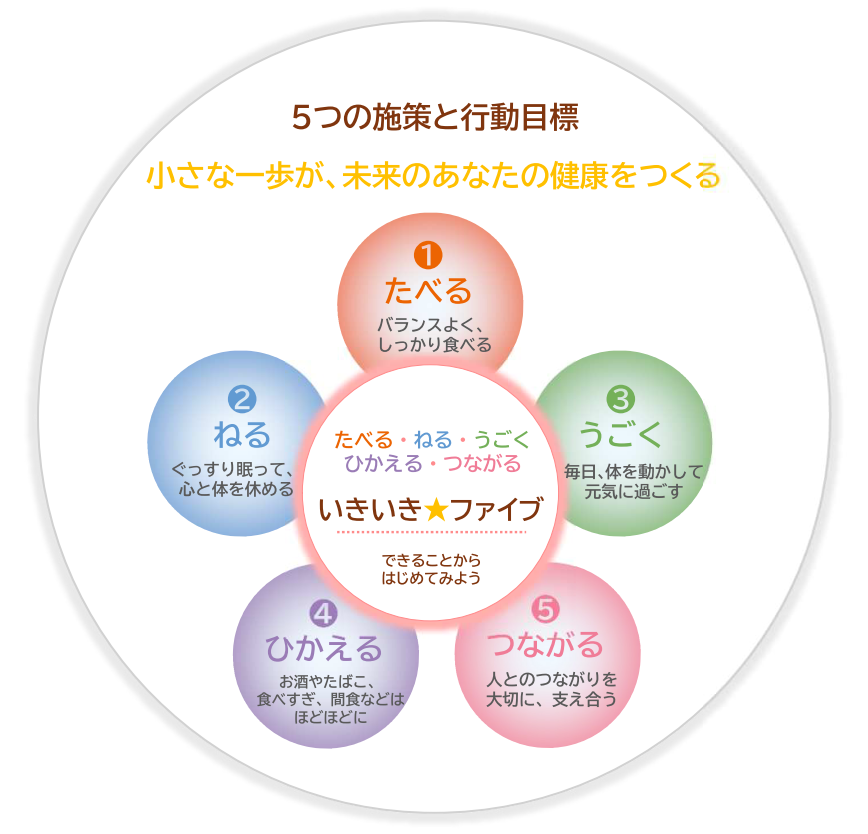
Five Actions for Health Promotion and Formulation of Behavioral Goals
We have established a set of five health actions, comprising the three essential elements of health – eating, sleeping and walking – along with the key themes of quitting smoking and communication. By subsequently deploying health-related measures and awareness activities in correlation to these five health actions, we aim to promote entrenchment of the health actions to maintain and improve mental and physical health.
Raising Health Awareness
Alps Alpine implements a range of measures to encourage individual employees to think about their health and to take active steps to improve their health in their daily lives. We team up with the health insurance association to arrange walking events and health improvement challenges as a way to encourage employees to engage in regular exercise, and we support healthy diets by providing health meals along with nutritional information in company cafeterias. We also organize health-related events and seminars, “vege checks,” body composition measurements, and other opportunities for employees to understand their own health and review their lifestyle habits. Through these activities, we promote greater health literacy and behavioral changes that contribute to employee health maintenance and improvement.
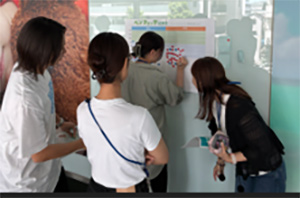
“Vege checks” help employees learn how healthy they are
Smoking Bans and Passive Smoking Prevention
Alps Alpine endeavors to prohibit smoking and prevent passive smoking to assist employee health maintenance and improvement and reduce the health risks associated with passive smoking. At bases in Japan, we have made progress on establishing smoke-free environments and we engage in ongoing deliberation and improvements with sights on a future total smoking ban on company premises. We also support employees’ voluntary efforts to quit smoking through consultations and monetary assistance for visits to smoking cessation clinics, as well as measures making use of a quit smoking app. Additionally, we promote understanding about passive smoking prevention and raise health awareness among both smokers and non-smokers through participation in the Yellow Green campaign and other awareness-raising activities. Through these activities, we strive to create workplace environments where employees feel at ease, and to mitigate health risks.
Promotion of Preventive Care
To help prevent lifestyle diseases, or the deterioration of symptoms, we team up with the health insurance association to promote employee uptake of specific health guidance, health checks and cancer screening. For specific health guidance, we are making efforts to increase the implementation rate by enabling multiple methods for receiving guidance (including face-to-face and online) and using a health management system to monitor progress and follow up with applicable participants.
To support cancer prevention and early detection, we participate in the Corporate Action to Promote Cancer Control program run by the Ministry of Health, Labour and Welfare. We have taken steps to increase the screening rate for checks specific to women, making it easier for women to undergo screening. This includes the use of mobile screening buses at Headquarters and the removal of the requirement for prior bookings. Alps Alpine will continue efforts to raise participation rates for health checks and cancer screening and promote preventive care, while incorporating feedback from employees.
Workplaces that Understand Women’s Health Issues
At all bases in Japan, we put in place frameworks enabling checkups specific to women and assist with the cost of tests performed via local authorities. We are also making it easier for women to undergo screening. This includes the use of mobile screening buses and the simplification of pre-screening procedures. In addition, we work to furnish workplace environments with facilities such as nursing rooms and showers to support women at different life stages. Through these initiatives, we look to create safe, reassuring workplaces empowering diverse employees to work with vitality and in good health.
Recognition as a Health & Productivity Management Outstanding Organization
For the seventh consecutive year, starting in 2020, Alps Alpine has been recognized as a Health & Productivity Management Outstanding Organization within the large enterprise category of the certification program run by Japan’s Ministry of Economy, Trade and Industry (METI).
The program recognizes large enterprises, small and medium-sized enterprises, and other organizations making outstanding efforts in health and productivity management in line with health-related challenges in communities or health-conscious activities led by the Nippon Kenko Kaigi.
Alps Alpine positions employee health maintenance and promotion as an important theme for management and will continue to act proactively in this area.