Climate change adaptation and mitigation
Basic Policy
Alps Alpine has identified “climate change adaptation and mitigation” as one of its material issues and is actively promoting climate action.
“Mitigation” refers to efforts to reduce greenhouse gas emissions and prevent the worsening of climate change in the future. From this perspective, we view the reduction of energy-derived CO2 as a critical issue and implement a variety of measures, including the adoption of renewable energy, promotion of energy-saving initiatives, and improvements in energy efficiency in facilities and production processes.
“Adaptation,” on the other hand, involves minimizing the impact of rising temperatures on natural disasters, ecosystems, and socioeconomic activities, while also leveraging climate change as an opportunity. With a broad portfolio of sensor products and component technologies, we are actively exploring the development of products and services that can contribute to detecting, monitoring, and managing climate-related risks.
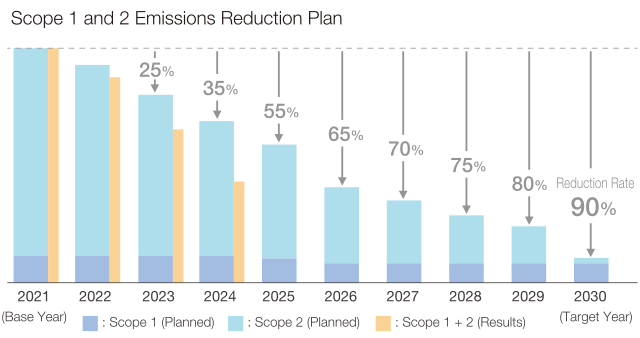
Reduction of GHG Emissions (Scope 1 and Scope 2)
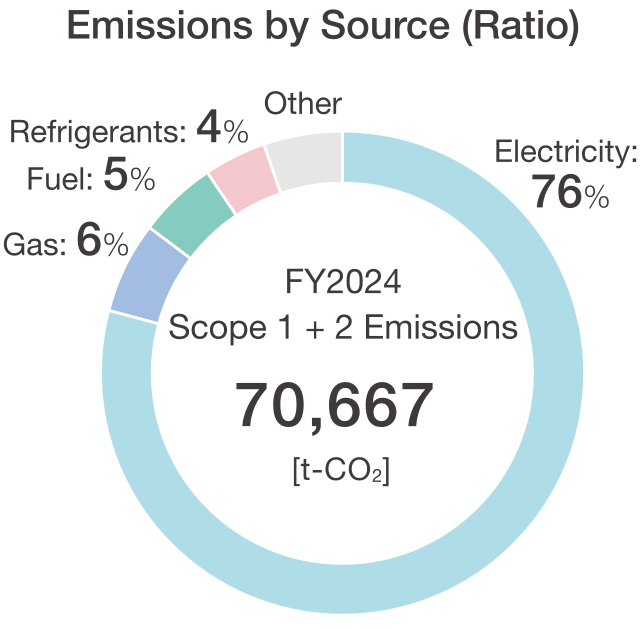
Of the greenhouse gases emitted from our production activities, 76% come from electricity. This makes the transition to renewable electricity and improved energy efficiency essential for reducing Scope 1 and 2 emissions. Against this backdrop, in April 2021, we declared our goal of using 100% renewable electricity by 2030.
In FY2024, we accelerated solar panel installations, achieving RE100 status at eight overseas plants, resulting in a renewable energy usage rate of 72%. Moving forward, we will continue to promote energy conservation and efficiency improvements in production lines, including the energy-efficiency training program launched in domestic plants in FY2024, which will be expanded in FY2025 and beyond.
Key Action Points Moving Forward
- Promote transition to renewable electricity
- Improve factory energy conservation and production line efficiency
Reduction of GHG Emissions (Scope 3)
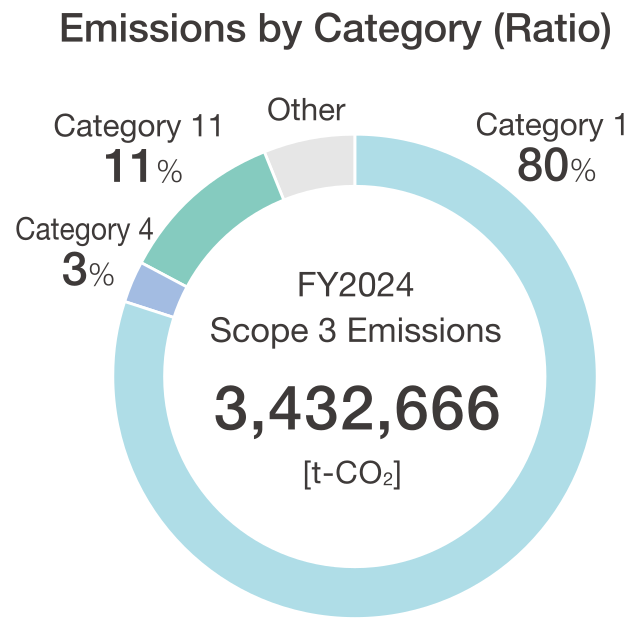
To reduce emissions from Scope 3’s largest contributor, Category 1, we began surveying GHG emissions in FY2022 with the cooperation of our suppliers. These surveys revealed that, on average, Scope 3 accounts for roughly 60% of GHG emissions at our suppliers.
In response, we identified two key priorities: calculating product carbon footprints and reducing emissions in high-impact hotspots. In FY2025, we will fully operationalize our initiatives by building a promotion structure to accelerate Scope 3 emission reductions.
Key Action Points Moving Forward
- Reduce product carbon footprints
- Strengthen supplier-led initiatives to reduce environmental impact
- Improve energy efficiency
| FY2024 Results |
FY2027 Target |
FY2030 Target |
FY2050 Target |
||
|---|---|---|---|---|---|
| GHG emissions reduction rate | Scope 1 + 2 | (61.7%) | (70%) | (90%) | Net-zero GHG emissions across the entire value chain |
| Scope 3 | 26% | ー | (25%) | ||
| Renewable energy use rate | 72% | 85% | 100% | 100% | |
* Based on GHG emissions compared with FY2021 (actual)
Calculation of Product Carbon Footprint
With the growing movement to reduce GHG emissions throughout the value chain, a movement has begun to effectively reduce emissions by calculating product carbon footprints and analyzing hot spots with high emissions. We began calculating the carbon footprint of our products in fiscal 2023 and are linking this to specific reduction measures.
Responding to Environment-Related Initiatives

RE100 Initiative |
Membership to promote the conversion of 100% of the electricity used in operations to renewable energy by 2030 |

JCLP |
Membership for the purpose of gathering information to achieve the 1.5°C goal |

SBT Initiative |
Certified to achieve 1.5°C target for the Company |

CDP |
Rated A- in Climate Change |